Mapping Time Zone Shifts and Their Influence on International Online Poker Tournament Participation Rates
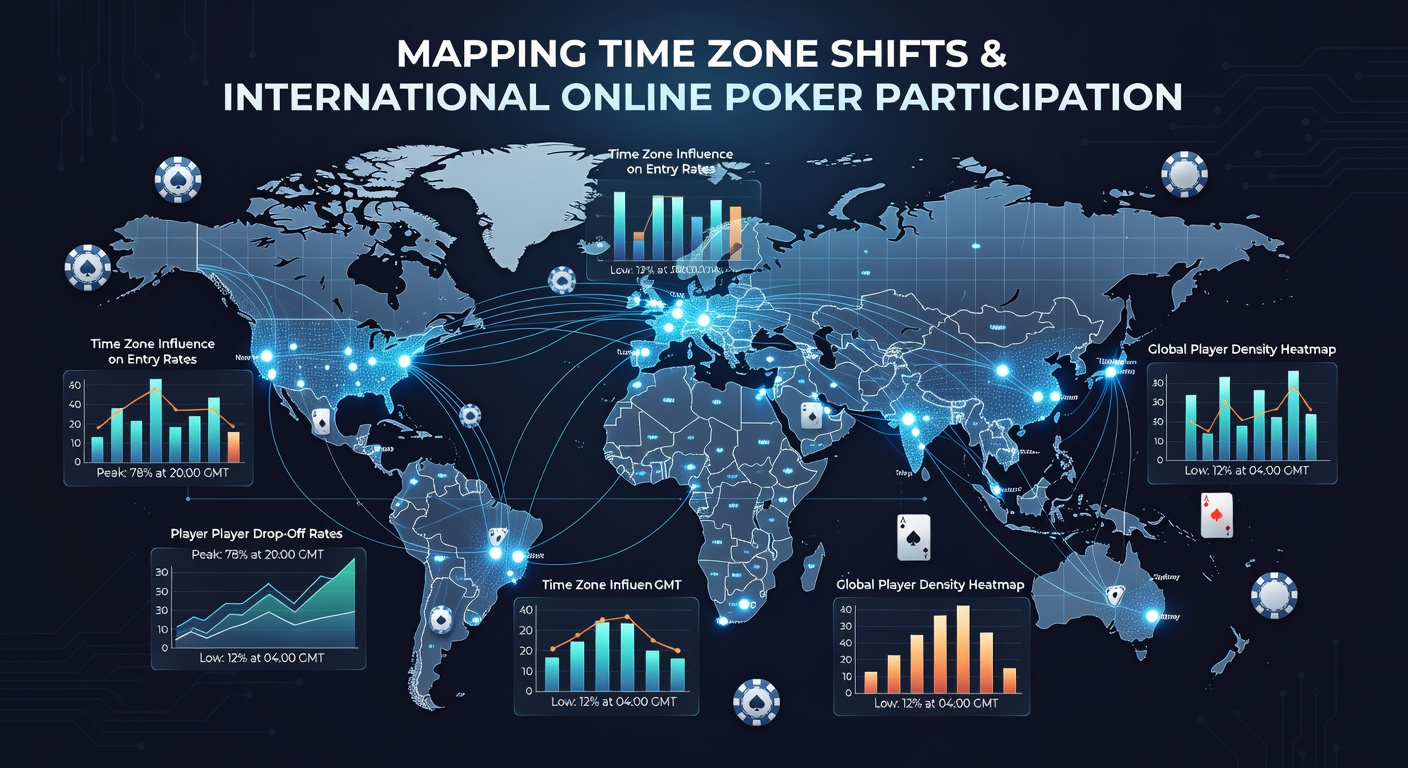
Online poker platforms host tournaments that draw participants from Asia, Europe, the Americas and Australia simultaneously, yet the underlying schedules align with specific clock times that create uneven engagement across regions. Time zone shifts from daylight saving changes alter when these events fall for different player groups, and participation data reveals measurable fluctuations tied directly to those adjustments.
Global Tournament Scheduling and Time Zone Basics
Major operators structure daily and weekly tournaments around coordinated universal time to accommodate broad audiences, but local clock interpretations vary by up to 19 hours between the farthest zones. Players in Pacific regions often encounter late-night or early-morning start times for events optimized for European afternoons, while North American participants face similar offsets during Asian-focused series. These structural realities produce baseline participation differences that widen when seasonal clock changes occur.
Daylight Saving Adjustments and Participation Data
Daylight saving transitions in March and November affect large player pools in North America and Europe, shifting tournament start times by one hour relative to local clocks in those areas. Records from multiple platforms show that European participation in evening events drops by measurable percentages when clocks advance, because the adjusted time pushes sessions later into the night for that region. Conversely, North American players sometimes register higher numbers when their clocks fall back, moving events into more convenient evening windows. Similar patterns emerge around southern hemisphere transitions, which occur in different months and create overlapping effects for Australian and New Zealand participants during northern summer periods.
Regional Player Pool Responses
Asian markets maintain stable participation because most countries in that zone do not observe daylight saving, leaving their local times unchanged while other regions adjust. This stability produces temporary increases in relative share from those markets during transition weeks. Data tracked across 2024 and 2025 events indicated that tournaments scheduled at 20:00 UTC saw elevated entry counts from East Asian time zones immediately after North American clock changes, as the relative timing became more favorable for those players. Operators have noted that such shifts also influence satellite qualification volumes, with more players from unaffected zones advancing to main events during those windows.
June 2026 Scheduling Context
June 2026 falls outside major daylight saving transition periods for most northern hemisphere jurisdictions, yet the month still features ongoing effects from earlier clock changes combined with standard work and school calendar influences. Tournament calendars published for that period include several marquee series whose start times remain fixed in UTC, meaning local times for participants continue to reflect the cumulative offset from March adjustments. Observers tracking entry statistics expect continued regional imbalances similar to prior years, particularly in series that straddle multiple continents.

Platform Tools and Player Adaptation
Many sites now provide time zone conversion displays and personalized schedule filters that allow users to view events in their local time. These features have reduced some friction associated with manual calculations, yet aggregate data still shows participation variance tied to absolute clock positions. Studies compiled by the Australian Gambling Research Centre document how players in regions with fewer events during their peak availability hours tend to migrate toward alternative formats or different operators during those periods. Similar findings appear in reports issued by iGaming Ontario, where cross-border participation patterns were examined in relation to schedule timing.
Operators respond by rotating featured events across different UTC slots throughout the year. This rotation strategy distributes opportunities more evenly, although complete equalization remains difficult because of the fixed nature of time itself. Late-night tournaments for one group inevitably coincide with daytime hours elsewhere, limiting crossover potential regardless of marketing efforts.
Longer-Term Patterns and Market Implications
Longitudinal tracking over multiple years reveals that consistent time zone disadvantages correlate with lower lifetime participation rates from affected regions. Players in time zones that rarely align with high-value events show reduced overall engagement compared with those whose local hours match popular schedules more frequently. These disparities affect prize pool sizes and player retention metrics, prompting some platforms to introduce region-specific qualifiers that feed into main events at more accessible times.
Emerging markets in South America and Africa present additional variables, because their time zone alignments differ from established player bases and their daylight saving policies vary or do not exist. As connectivity improves in those areas, participation data will likely reflect the same sensitivity to clock positioning already observed elsewhere.
Conclusion
Time zone shifts continue to shape international online poker tournament participation through predictable mechanisms tied to daylight saving transitions and fixed UTC scheduling. Regional data consistently demonstrate that participation rises and falls in response to how those shifts reposition events on local clocks. Operators and players alike navigate these dynamics through schedule adjustments and conversion tools, yet the underlying geographic realities maintain measurable influence on entry volumes across markets. Continued monitoring of these patterns remains essential for understanding global player behavior as the industry expands into new time zones.